About Hundru Falls
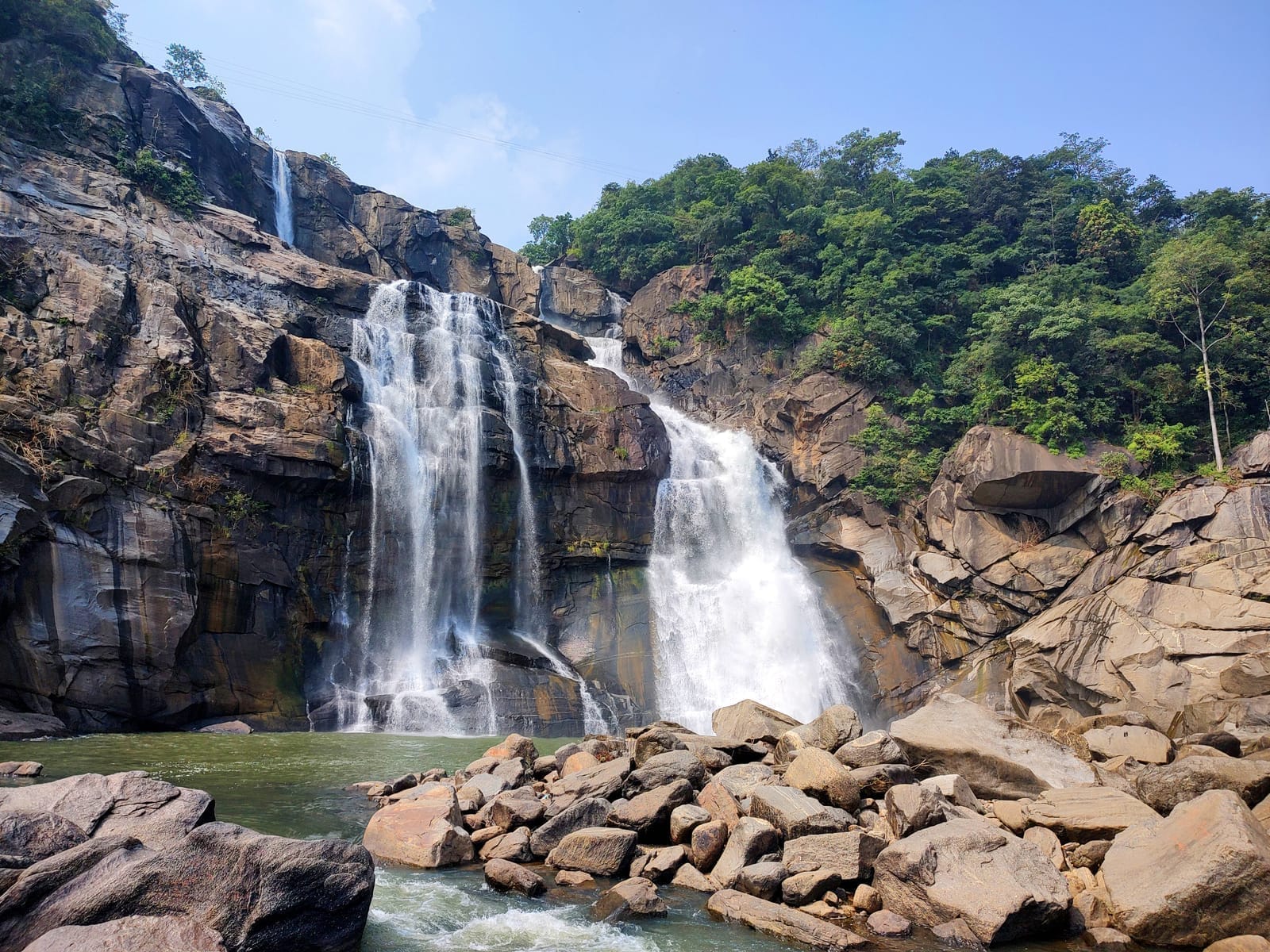
Hundru Falls is a natural waterfall landscape in Ranchi district whose significance comes from its exact setting and use. Hundru is made by the Subarnarekha River, and the official district account draws attention both to the high descent and to erosion-shaped rock at the foot of the fall. Hundru Waterfall is formed where the Subarnarekha River drops about 320 feet on the Ranchi–Purulia road, making it one of Ranchi’s signature plateau landscapes. The district tourism page describes the high fall, erosion-shaped rock formations and a pool at the base historically used for bathing and picnicking. Flow, spray, slippery rock and sudden monsoon changes can create serious hazards. Visitors should stay behind current barriers, use marked steps or viewpoints, avoid wet ledges and deep water, supervise children and follow local closures. Keep food waste and plastic out of the river and do not remove rock fragments.
Hundru Falls belongs to the dissected Chotanagpur Plateau, where seasonal rivers encounter resistant rock and lose height over short distances. Its appearance is therefore controlled by rainfall and catchment conditions: monsoon water can broaden and darken the cascade, while the drier season reveals ledges, channels and the structure of the riverbed. That variation is part of the place’s ecology, not a defect. Spray zones, shallow margins and adjoining vegetation create small habitats, while the river continues downstream as a working ecological system. Visitors gain more by observing flow, rock texture and forest edge than by treating the plunge pool as a swimming facility.
Hundru is the Subarnarekha plunging through an erosion-cut plateau edge, with sculpted rock and a powerful seasonal pool below. Spray can wet steps far from the main channel, and the historic use of the pool for bathing does not establish present safety. Read the water from a stable public approach: spray, rainfall and upstream flow can change conditions faster than a casual observer expects. Keeping packaging, soap and glass out of this particular river setting protects both the site’s documented character and downstream users.
The most rewarding season depends on purpose. Soon after the rains, Hundru Falls usually carries stronger flow and the surrounding vegetation appears fresh, but access paths may remain wet. Cooler, drier months favour walking, family outings and closer study of the rock formations, though the cascade may be less powerful. Travellers should check same-day weather and district advisories, start early enough to return in daylight, and carry drinking water, sun or rain protection and footwear with grip. Food and fuel are more reliable in larger settlements than at a forest-edge approach.
Hundru is the Subarnarekha plunging through an erosion-cut plateau edge, with sculpted rock and a powerful seasonal pool below. Local stewardship is best supported by asking residents which approach is public, parking without blocking village movement and buying refreshments without leaving disposable waste. Spray can wet steps far from the main channel, and the historic use of the pool for bathing does not establish present safety. An unhurried visit gives the landscape and its custodians more respect than a hurried multi-stop waterfall checklist.
Seen with care, Hundru Falls contributes a distinct chapter to the heritage and ecology of the Chotanagpur Plateau. The experience is strongest when visitors allow time to observe, follow local instructions and separate documented fact from tradition. Public conditions can change with season, maintenance, worship or conservation work, so same-day official information should guide practical decisions without diminishing the enduring story of the place.
How to Reach Hundru Falls
Nearest Airport: Birsa Munda Airport, Ranchi (IXR) connects with direct flights from Delhi, Mumbai, Bengaluru, Kolkata
Nearest Railway Station: Ranchi Rly Stn (45 km) is the primary railhead with frequent express connections across Eastern and Northern Railway networks
Road Access: Well-connected via state highways from Ranchi headquarters. Regular JTDC tourist buses, private taxis, and shared cabs ply frequently.