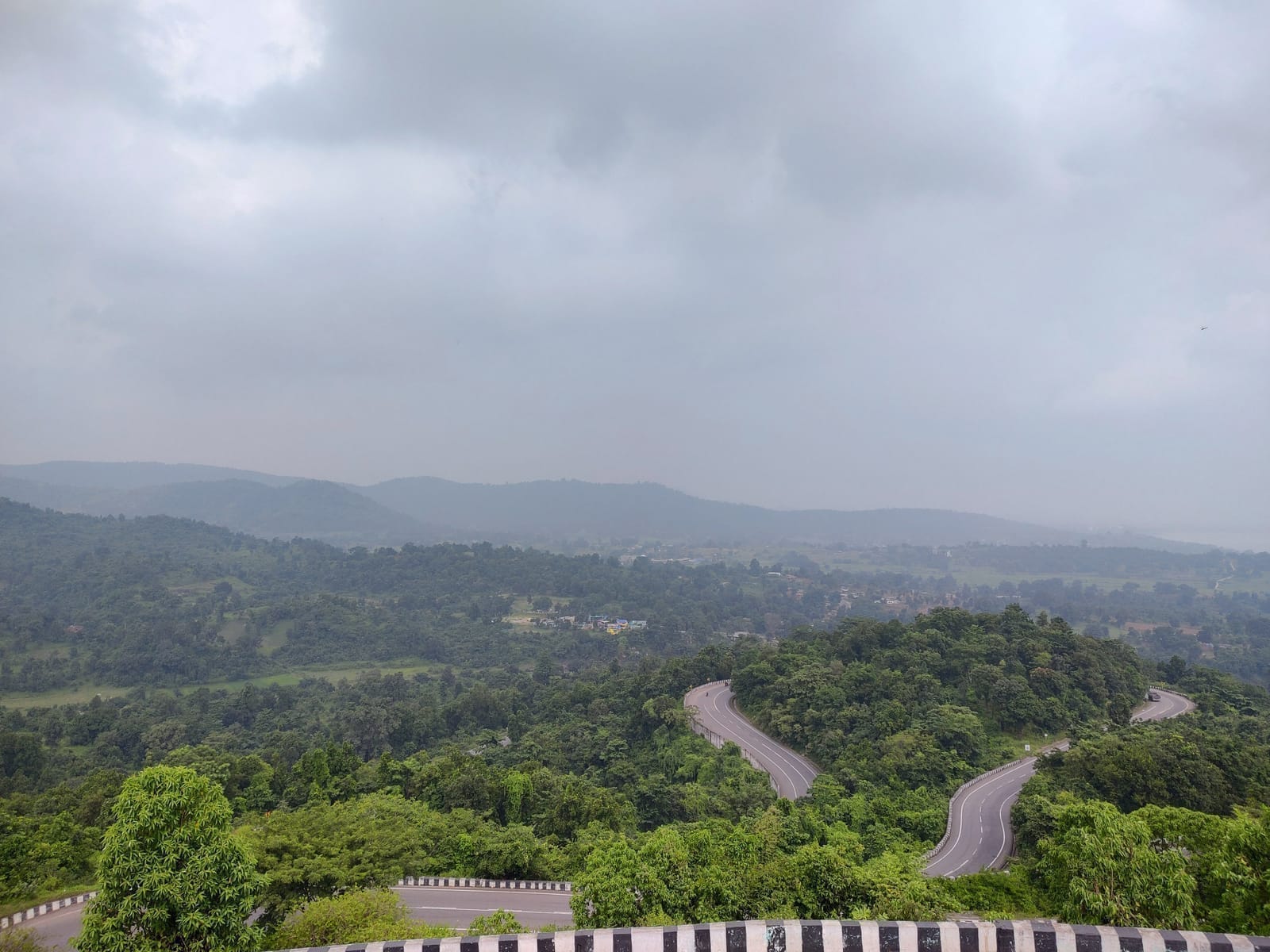
About Biodiversity Park Deoghar
Biodiversity Park Deoghar is a named nature-education and recreation project in district planning material. It was grouped with Punasi Dam, Tapovan, Trikut and Dighariya in a proposed eco-tourism consultancy that was later cancelled. This record should therefore describe the purpose of a biodiversity park—interpreting local plants, habitats and ecological relationships—without inventing a completed species collection, visitor centre or trail network. If maintained as a public park, its value will depend on labelled native vegetation, habitat care and environmental learning rather than decorative planting alone. If development is incomplete, the name should not imply unrestricted access.
The Deoghar district landscape links rocky uplands around Trikut and Tapovan with the Mayurakshi watershed and a dense urban pilgrimage centre. Biodiversity Park Deoghar occupies one point in that transition. Monsoon rain renews vegetation and water but makes exposed rock and banks hazardous; the cooler dry season is easier for walking but brings different ecological conditions. Shravan has a separate rhythm, with pilgrimage movement affecting roads, sanitation, crowd density and the availability of services far beyond the temple courtyard.
The value of Biodiversity Park Deoghar lies in helping visitors see relationships among plants, soil, water and human use. Interpretation is stronger when it explains native habitat and restoration instead of listing decorative species. Small groups, reusable water bottles and lawful local guides reduce impact. Dogs, music and food can disturb wildlife or planted areas and should follow posted rules. Any adventure activity requires a separate authorised operator and safety system; an “eco-tourism” proposal alone does not create one.
The wider Deoghar–Dumka pilgrimage route links Biodiversity Park Deoghar with Basukinath and, for some travellers, Maluti. This is a regional journey rather than a single attraction. Festival traffic, rest stops and temple schedules can reshape the day, so geographic proximity should not be mistaken for guaranteed quick access.
The most credible account of Biodiversity Park Deoghar is also the most respectful one: it distinguishes evidence from tradition, avoids promises about changing services and leaves the site physically and socially undisturbed.
Movement at Biodiversity Park Deoghar should be planned around its documented physical form and present use. Biodiversity Park Deoghar is a named nature-education and recreation project in district planning material. It was grouped with Punasi Dam, Tapovan, Trikut and Dighariya in a proposed eco-tourism consultancy that was later cancelled. These features determine whether visitors encounter steps, rock, crowded ritual space, a working road, water margins or controlled institutional grounds. The practical response should follow the site itself: use the recognised approach, give daily users priority and do not infer step-free access from the mere existence of a road, gate or tourism listing.
Local stewardship at Biodiversity Park Deoghar protects a specific cultural or ecological relationship, not an interchangeable attraction. It was grouped with Punasi Dam, Tapovan, Trikut and Dighariya in a proposed eco-tourism consultancy that was later cancelled. This record should therefore describe the purpose of a biodiversity park—interpreting local plants, habitats and ecological relationships—without inventing a completed species collection, visitor centre or trail network. Spending with authorised guides, vendors, performers or makers can support that relationship where services are offered, but money never purchases access to private prayer, homes, rehearsals, students, funerary rites or restricted infrastructure. Consent remains necessary for identifiable photographs, recordings and online publication, especially when children, worshippers or community knowledge are involved.
Before setting out, consult the latest district, temple, park or engineering authority notice relevant to Biodiversity Park Deoghar. Current information matters most for temporary closures, crowd plans, water releases, public events and institutional access. It is reasonable to describe these arrangements as variable without weakening the destination's story; doing so separates durable heritage from services that can change overnight.
The most inclusive way to experience Biodiversity Park Deoghar begins with the evidence recorded for this exact destination. Biodiversity Park Deoghar is a named nature-education and recreation project in district planning material. A visitor who cannot complete a climb, enter a crowded sanctum or negotiate an uneven bank may still understand the place from a lawful lower viewpoint, interpretation area or community account. Families should assess heat, water, traffic and crowd conditions according to this setting rather than expect a standardised tourism facility. Custodians’ current directions take precedence over old promotional descriptions.